Srinagar has four distinct seasons, and there is no single best one. The right time depends on what you want to see and how much cold you enjoy.
Spring: March to May
The valley wakes up. Almond blossom comes first, and the Indira Gandhi Memorial Tulip Garden usually opens around late March or early April for a few short weeks. Tulip dates shift with the weather each year, so check them before you fix your travel. Days are mild and evenings are still cool.
Choose spring for flowers, gardens and fresh mountain air.
Summer: June to August
Summer is the busy season. Srinagar stays pleasantly mild while the plains swelter, and the high meadows at Sonamarg and Gulmarg are at their greenest. Book early, particularly for school holidays.
Choose summer for family trips, shikara rides and long days out in the mountains.
Autumn: September to November
Many regular visitors say this is Kashmir at its most beautiful. The chinar trees turn copper and gold, the skies are often clear, and the crowds thin out. Mornings get crisp by October, and by November you will want proper warm layers.
Choose autumn for photography, quiet and colour across the lake.
Winter: December to February
Winter is cold, with snow in the valley in many years. The harshest stretch is Chillai Kalan, the traditional forty days of deep winter that begin in late December. Gulmarg becomes a ski destination. Mountain roads can close after heavy snowfall, so leave some slack in your plans.
Choose winter for snow, kahwa by the heater and a very different Kashmir.
The lake through the year
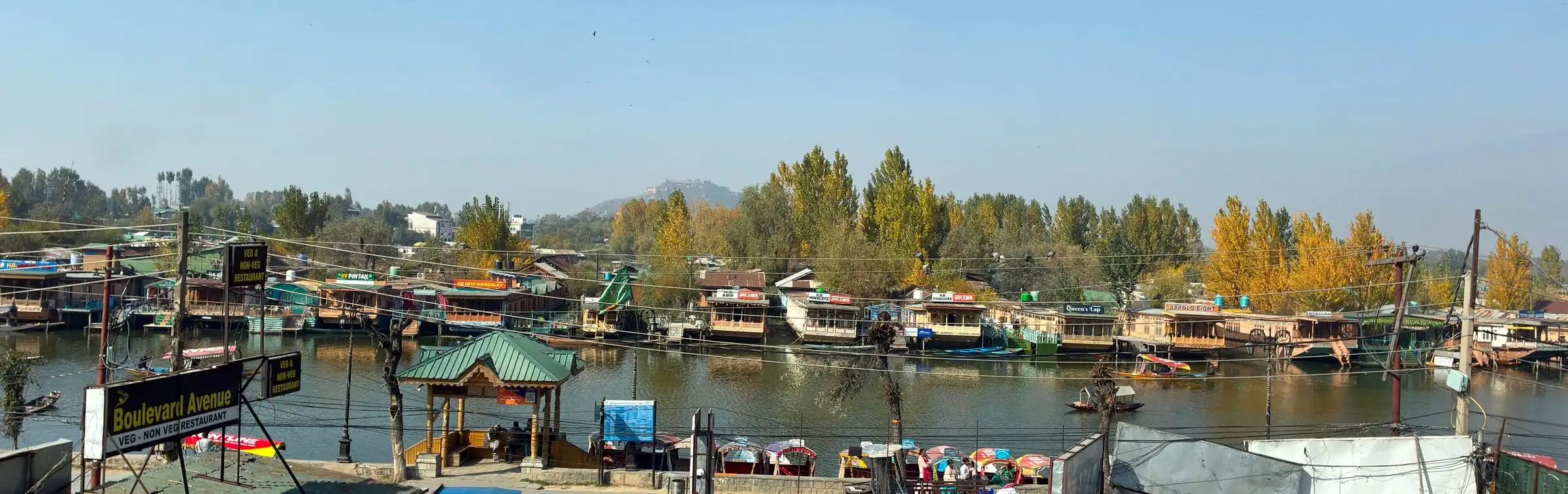
Dal Lake looks different in every season, and that alone can decide when you come. In spring, the water reflects fresh green along the shore and the snow still sits on the higher peaks. In summer, the lotus blooms across parts of the lake, usually from around July into August, and shikaras stay busy into the evening.
Autumn is the time for photographs. The light is low and clear, and the trees along the far bank turn gold behind the houseboats. In winter, the crowds disappear and mist often hangs over the water in the morning. In the very coldest years, parts of the lake’s surface can freeze, though this is rare.
What to pack
Srinagar sits at about 1,600 metres, so it is cooler than most visitors expect, and temperatures can swing between day and night.
- Spring: a warm jacket for evenings, a light sweater for the day, and something for rain.
- Summer: light cotton clothes, a layer for evenings on the water, and sun protection. Bring a jacket for Gulmarg or Sonamarg.
- Autumn: layers you can add as the day cools, and proper warm clothing from late October.
- Winter: thermals, a heavy coat, a hat and gloves, and shoes with a good grip for icy paths.
Whatever the season, comfortable walking shoes are worth bringing. The Mughal gardens have plenty of steps, and you may spend long hours on your feet.
Crowds and booking
Demand does not spread evenly through the year. The tulip weeks in spring and the school holidays in summer tend to fill up first, so contact us early for those dates. If you specifically want a room facing the lake, an early enquiry gives you more choice.
Late September, October and March often feel calmer. Winter can be quiet in Srinagar, though Gulmarg gets busy for the snow. Festival dates, such as Eid, can also bring more visitors and affect opening hours, so check the calendar when you plan.
How weather changes your plans
Your season affects your day trips as much as your packing. From around November to March, snowfall can close or slow mountain roads, so keep a spare day if a particular trip matters to you. The road to Pahalgam and the Mughal Road can be affected too. Flights into Srinagar can also be delayed by winter fog or snow, and so it is sensible to avoid a tight connection on your way home.
In summer, the weather is more settled but the roads and viewpoints are busier. Starting early helps in every season, and it is usually the difference between a relaxed day out and a long wait in traffic.
How to decide
If it is your first visit and you want easy weather, aim for late spring or early autumn. Come in summer if you are travelling with children during school holidays, and in winter if snow is the whole point of the trip. Whenever you come, send us your dates on WhatsApp and we will tell you what to expect that week.