Srinagar makes a comfortable base for seeing the wider valley. You can leave after breakfast, spend the day in the mountains and be back by the lake for dinner. Each of the three classic trips has its own character.
Distances below are approximate. Drive times vary with season and traffic, so leave early.
Gulmarg: roughly 50 km
The closest of the three, Gulmarg is a high meadow ringed by forest. Its main draw is the gondola, which climbs towards Apharwat in two phases. Buy tickets online in advance when you can, as they sell out in the busy months. In winter, Gulmarg is India’s best-known ski slope.
Best for the gondola, snow and wide views.
Sonamarg: roughly 80 km
The road to Sonamarg follows the Sindh River through the Ganderbal valley, and the drive is half the pleasure. At the end you reach a broad meadow beneath glaciers. Heavy snow can affect access in winter, so check conditions before you set out.
Best for river scenery, glaciers and summer meadows.
Pahalgam: roughly 90 km
The longest drive of the three, Pahalgam sits along the Lidder River among pine forest. On the way you pass the saffron fields of Pampore, which flower in autumn. Aru and Betaab valleys are the usual stops, reached by local taxi from town.
Best for forest walks, rivers and a slower pace. Stay overnight if your schedule allows it.
Which one should you choose?
If you have time for only one, let the season and your group decide.
- Choose Gulmarg if you want snow, or if you are travelling with people who would rather not walk far. The gondola does the climbing for you, although it can close in high winds and queues build up in peak season.
- Choose Sonamarg if you want big mountain scenery and a beautiful drive. It is at its best from late spring to autumn, when the meadows are open and the Thajiwas glacier area is easy to reach.
- Choose Pahalgam if you prefer rivers and pine forests, and do not mind the longer road. It rewards an overnight stop more than the other two.
With two days to spare, Gulmarg and Sonamarg are the easiest pair, as each is a shorter drive and the days feel quite different from one another.
What a typical day looks like
A good day trip begins early. Leaving around 7 or 8 am gets you ahead of the traffic and the longest queues. You will usually reach your destination by mid-morning, spend four or five hours there, and start back by mid-afternoon so that you are off the mountain roads before dark.
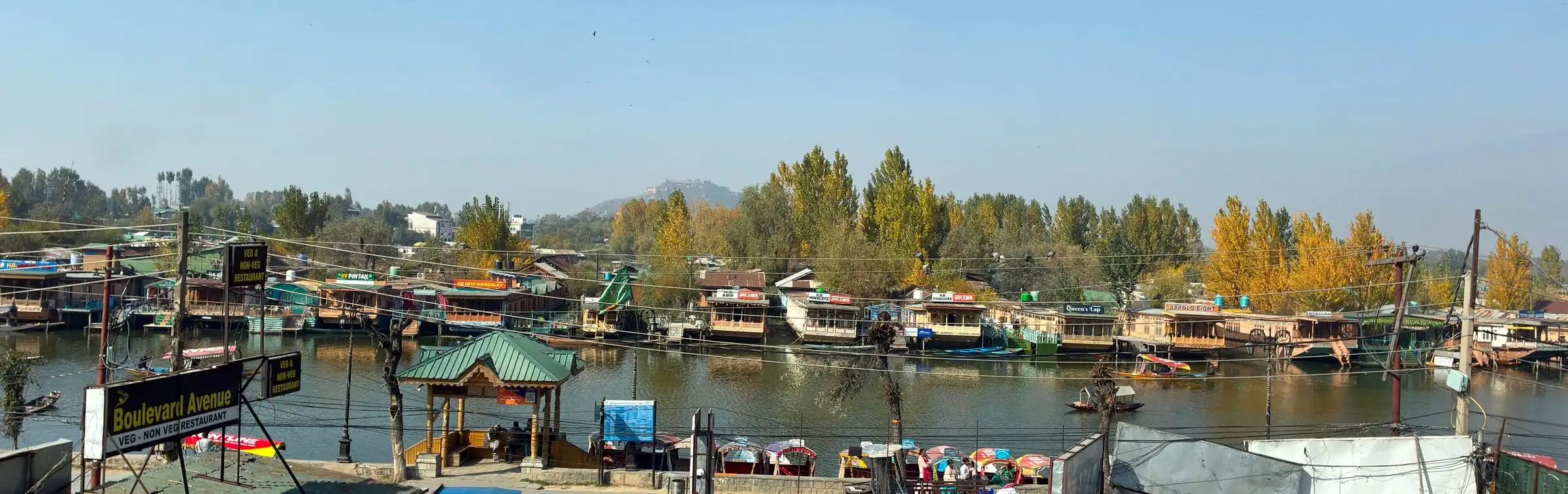
Traffic builds up on summer weekends and around school holidays, so allow extra time. Ask us for a packed start if you are leaving before breakfast is ready, and let us know when you expect to return. With Boulevard Avenue downstairs, dinner is simple when you get back tired.
Local taxis and ponies
At all three places, the last part of the trip often runs on local rules. Your car from Srinagar may be able to go only as far as the main town, with local taxis or ponies taking you onward to specific viewpoints. This is normal, and these local rates are usually separate from your day’s car hire.
Agree on a price for ponies and guides before you start, and be clear about exactly which points are included and how long you will stay. If you are not comfortable on horseback, say so early, as many of the shorter walks can be done on foot.
Closer alternatives
If you would rather have a shorter day, Doodhpathri and Yusmarg are both meadows within reach of Srinagar, and often quieter than the big three. They do not have the same famous attractions, but they offer open grassland, streams and pine forest with less driving and fewer crowds. Check road conditions and which areas are open before you set off, as local access rules can change.
Planning tips
- Hire a car for the full day and confirm the price, including any stops, before you leave.
- Check for any current local advisories, and ask us what is open, as access to some areas can change at short notice.
- Carry water, snacks and some cash. Card and mobile payments are not always reliable in the mountains.
- Carry warm layers. It is noticeably colder at altitude than in Srinagar.
- Check road and weather conditions the evening before, especially between November and March.
- Carry your ID. Checkpoints are routine on these roads.